
You've hung the little tree from the mirror. You've sprayed the upholstery foam. You've left coffee grounds in a sock overnight because someone on the internet swore by it. And two days later the car smells like cigarettes and wet dog again — just with a layer of "new car scent" on top.
Here's why that keeps happening, and what actually works.
Why Sprays and Air Fresheners Always Lose
Smells are physical. Smoke, pet dander, spilled milk, hockey-bag funk — they're all volatile organic molecules that soak into everything porous in your cabin: seat foam, carpet underlay, headliner, seatbelt webbing, and the evaporator core inside your vents. An air freshener doesn't remove a single one of those molecules. It just adds a stronger smell in front of them, and it evaporates first.
That's also why the smell "comes back" on hot days or when the defrost kicks in — heat and airflow release more of the trapped molecules from deep in the materials.
Step One Is Always Physical Cleaning
No machine fixes a dirty car. The source material has to come out first:
- Full vacuum of carpets, seats, seams, and under the seats where the crumbs and dander actually live.
- Hot-water extraction / shampoo of carpets and cloth seats to pull out what's soaked in.
- Leather and hard-surface cleaning — smoke film sticks to plastics, glass, and leather more than people expect.
- Cabin air filter replacement — a smoker's car with the original filter is a smoke sponge bolted into the vent system.
For a light odor, a proper interior detail alone often solves it. But for smoke, long-term pet use, or a spill that's had time to go sour, cleaning gets you 80% there — and the last 20% is the part you can still smell.
What Ozone Treatment Actually Does
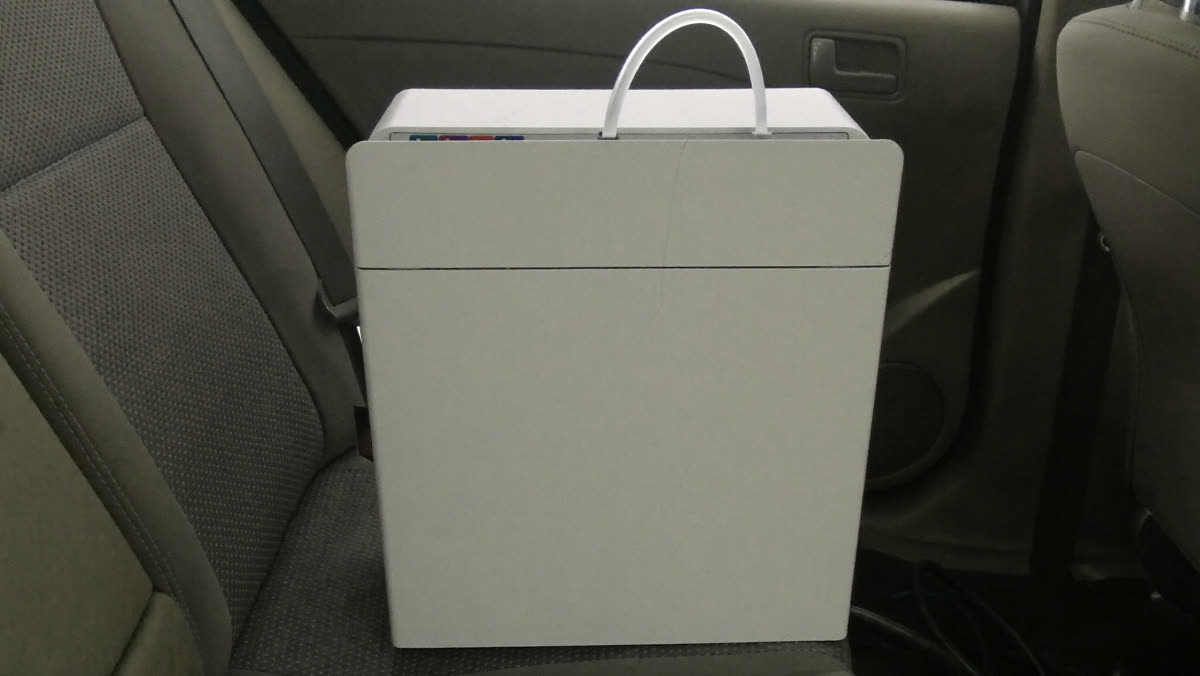
An ozone generator converts oxygen (O₂) into ozone (O₃) — an unstable molecule that aggressively oxidizes whatever it touches. Ozone gas penetrates the same places the odor molecules hide: deep in seat foam, inside the vents, under the carpet. When ozone meets an odor molecule, it chemically breaks it apart. The smell isn't covered — it no longer exists.
Because it's a gas, it reaches where no cleaner, spray, or wipe ever can. That's the difference between ozone and every product on the parts-store shelf.
How We Run an Ozone Treatment
- Deep interior clean first — ozone destroys odor molecules in the air and surfaces, not the physical dirt generating them.
- Sealed cabin, generator running — the vehicle sits closed with the ozone generator cycling, HVAC on recirculate so the gas works through the vent system.
- Nobody inside — ever. Ozone at treatment concentration isn't safe to breathe. This is a big part of why it's a professional service: proper concentration, proper time, proper airing out.
- Full ventilation after — ozone naturally reverts to oxygen within hours; we air the vehicle out completely before you get it back.
Real talk: ozone is the right tool for smoke, pets, food, and mildew smells. It won't fix a physical source that's still there — a soaked carpet pad or leaky trunk seal has to be dealt with first. That's exactly what we check during the interior detail stage.
When It's Worth Doing
- You bought a used vehicle from a smoker (or it smells like the previous owner's dog).
- Kids + milk + Alberta summer happened.
- You're selling — an odor-free interior directly affects what buyers offer.
- Hockey gear, work gear, or a season of hauling crews in the truck.
Ozone treatment pairs with our interior detailing, and we'll tell you honestly whether you need both or the clean alone will do it. Call or text 780-619-8731.